With the continuous promotion of global environmental protection policies and the gradual upgrading of urban civilized construction standards, the construction machinery industry is undergoing a profound green transformation. Traditional fuel-driven construction equipment has gradually exposed many limitations in modern construction scenarios, such as exhaust emissions, high noise, large energy consumption, and restricted use in closed urban areas and indoor spaces. In this context, small and flexible electric lifting machinery has broken the market pattern of traditional fuel equipment and become the fastest-growing segmentation track in the construction machinery industry in recent years.
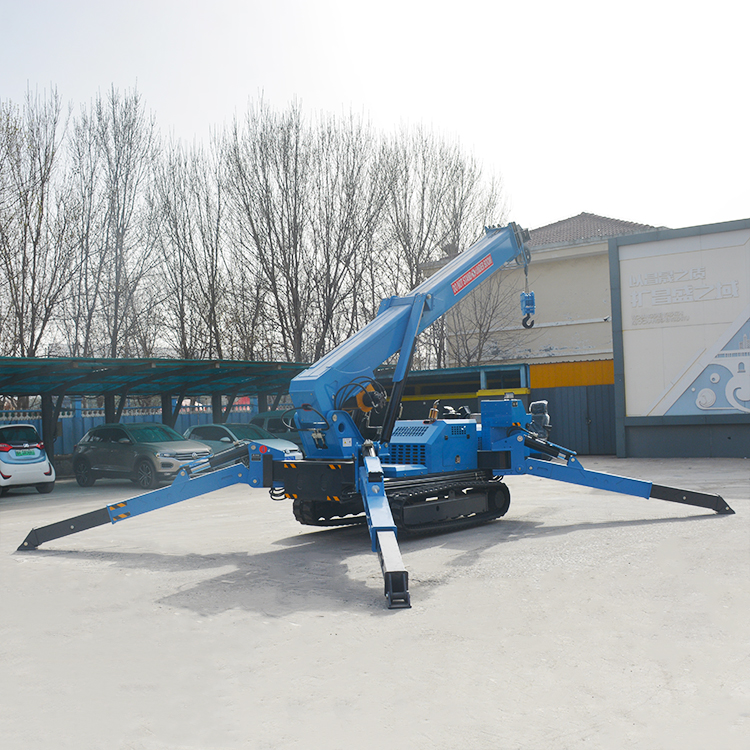
In recent years, the global urban renewal, old community renovation, commercial building upgrading, and indoor fine decoration markets have continued to expand. A large number of construction operations need to be completed in dense urban buildings, closed indoor environments, and environmentally protected core areas, which puts forward higher requirements for the environmental protection performance, flexibility and safety of construction equipment. Electric small cranes represented by electric spider cranes and battery-powered crawler cranes have the advantages of zero emission, low noise, low vibration, flexible operation and no fuel pollution, which perfectly meet the construction needs of high-standard environmental protection scenarios and are widely recognized by engineering contractors in Europe, America, Southeast Asia and other regions.
Industry market research data shows that the market penetration rate of electric small lifting equipment has increased year by year, and the market scale maintains a double-digit growth rate every year. The industry’s competition logic has completely changed from the original simple price competition to comprehensive competition focusing on green technology research and development, intelligent equipment performance, refined manufacturing quality and full-life-cycle service. Professional manufacturers with independent R&D capabilities, green production bases and perfect quality control systems will continue to occupy the dominant position in the market, and electrification and low carbon will become the core mandatory standards for the iteration and upgrading of small lifting machinery in the next five years.


