With the continuous improvement of urban building density and the increasingly diversified construction scenarios, the limitations of traditional large-scale cranes in urban construction are becoming more and more obvious. Large lifting equipment has a large chassis, inflexible movement, high site requirements, and cannot adapt to narrow indoor corridors, small outdoor streets, roof intervals and other complex working conditions. At the same time, the construction cost of large equipment is high, and it is easy to cause damage to indoor floors, decorative surfaces and urban road surfaces, which cannot meet the needs of modern fine construction.
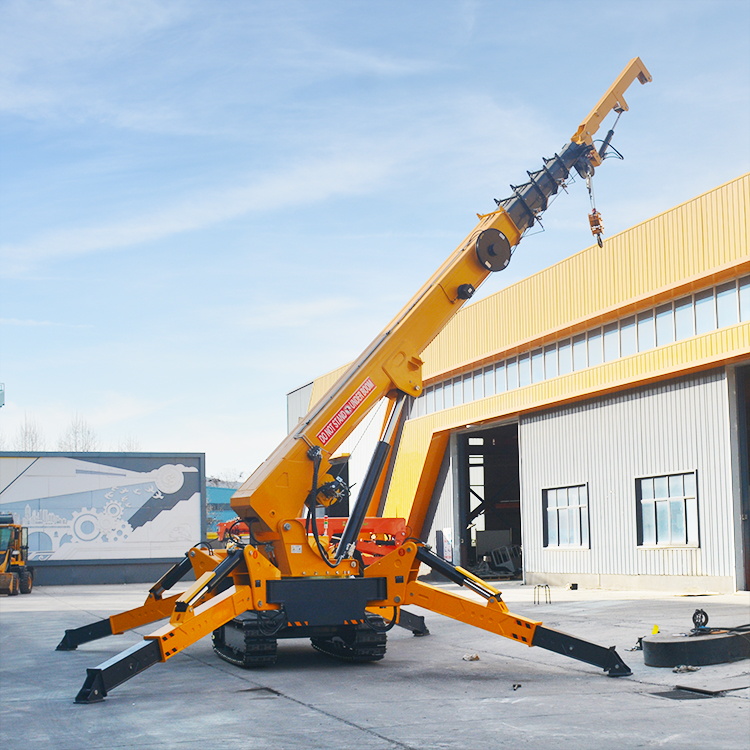
Against this background, lightweight, flexible and high-precision spider cranes have quickly become the core essential equipment in the field of narrow-space high-altitude operation. The spider crane adopts a multi-support leg design and ultra-narrow crawler chassis, which can freely pass through narrow door openings, corridors and staircases, and can stably operate on uneven ground and limited working sites. The whole series of products cover mini light-load type, medium conventional type and large super-high operation type, which can meet the hoisting requirements of different working heights and different load weights, and fully adapt to indoor decoration hoisting, glass curtain wall installation, roof photovoltaic module installation, building exterior wall maintenance, industrial equipment handling and other scenarios.
In addition, modern spider cranes are equipped with intelligent remote control system, automatic leveling system, overload protection system and low ground pressure design, which can effectively protect the ground and decorative materials, greatly improving the safety and accuracy of fine hoisting operations. Industry insiders said that with the continuous deepening of urban renewal and fine municipal management, the market demand for narrow-space and high-precision high-altitude operation will continue to grow. Intelligent and multi-functional spider cranes will completely replace part of the traditional large equipment and manual hoisting methods, and the market development prospect is extremely broad.


