A Small Spider Crane is bought once and used for years, so a factory-direct China manufacturer should ask about access width before quoting. We built the JOJO Machinery range around that idea. Below are the five questions our export team sends to every first-time buyer, honest capacity bands, three mistakes that cost real money, and the exact data we need before a quotation can be prepared.
Most first-time buyers open the conversation with lifting capacity. It is the third question, not the first.
Question one — how wide is the narrowest point the machine must pass? A doorway, a stairwell opening, a garden gate, a lift lobby. If the answer is 900 mm, the crane that suits you is a different crane from the one that suits an open pad beside a warehouse.
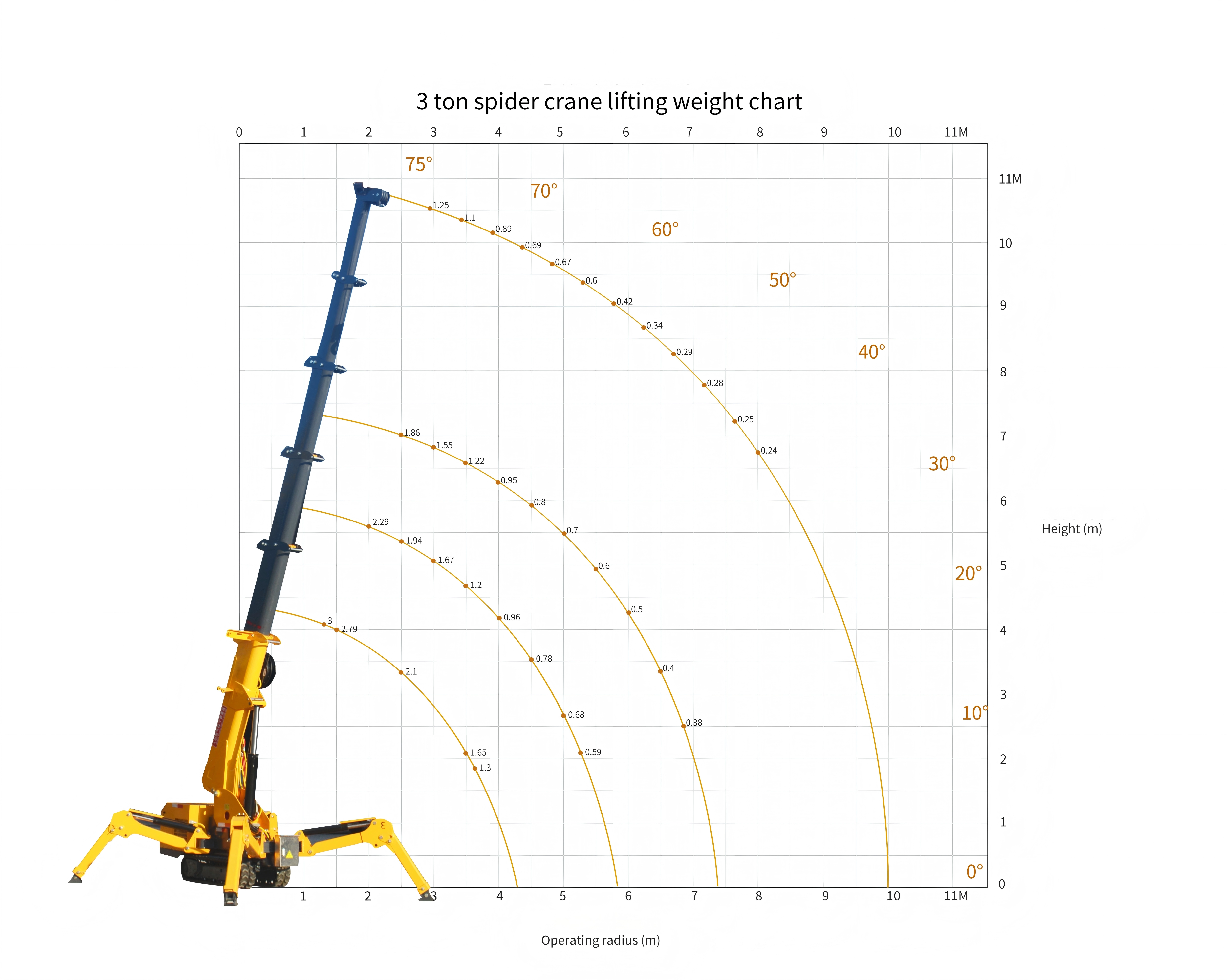
Question two — what is the working radius, and how high must the hook travel? Rated capacity on a spec sheet is quoted at minimum radius. The figure that keeps you safe is the capacity at the radius where you will actually work, at the height you will actually lift. A 3 t machine lifting 8 m out may be carrying under 300 kg. That surprises people.
Question three is the load itself. Not only weight — shape, centre of gravity, and whether it can be rigged with slings or needs a spreader beam.
Question four is ground bearing. Paved yard, packed gravel, or a suspended slab? Outrigger pads spread load, but no pad turns weak ground into strong ground.
Question five is power supply. Diesel, single-phase electric, or three-phase electric. In renovation work inside a live building, electric is usually the answer — our electric units run quietly enough to talk over while working.
We have watched a buyer sign for a 3 t crane and only later discover it would not fit through his own gate. That mistake costs a machine, a deposit, and a season of work.
Capacity Range at a Glance
A Small Spider Crane rarely lands neatly in one band, so the table below is a map rather than a final answer.
Model band
Max capacity
Working radius range
Body width
Typical jobs
Compact
1,000 kg
2.0–6.5 m
650–800 mm
Equipment moves, low-rise works
Standard
2,000 kg
2.5–8.0 m
700–1,100 mm
Glazing, roofing, HVAC
Strong
3,000 kg
3.0–10.0 m
800–1,400 mm
Steel frames, heavier plant
Two buyers with the same load frequently need different bands, because height and radius decide. A Small Spider Crane with a wide body and a narrow-body unit of the same tonnage are not interchangeable on a tight site.
Three Mistakes We See Every Year
Mistake one: buying by capacity alone. Tonnage is the headline, access is the reality.
Mistake two: ignoring the outrigger footprint. The machine needs room for four legs, not just a body. On a tight job, measure the deployed stance, never the travelling size.
Mistake three: skipping the spare parts conversation. Ask early which items are consumable, how long they last, and how fast they ship. A cheap machine with a six-week parts wait is not cheap. It is a rental with no income.
What We Need Before We Quote
Send five lines and we can quote properly: load weight and shape; working radius and lifting height; narrowest access width and door height; ground type; and available power supply. Add a site photo or a rough sketch, and our engineers will propose a model instead of a price bracket. That is the difference between a catalogue and a real quotation for a Small Spider Crane.
Documentation matters as much as the machine. Ask for the load chart at your working radius, the outrigger stance drawing, the electrical diagram and a parts list in English. A seller who cannot produce those four documents before deposit rarely supports you properly after it. We also send a short video from the test bay, filmed on the actual unit before crating, so you see the machine that is on its way to you rather than a stock photo.
Specifications
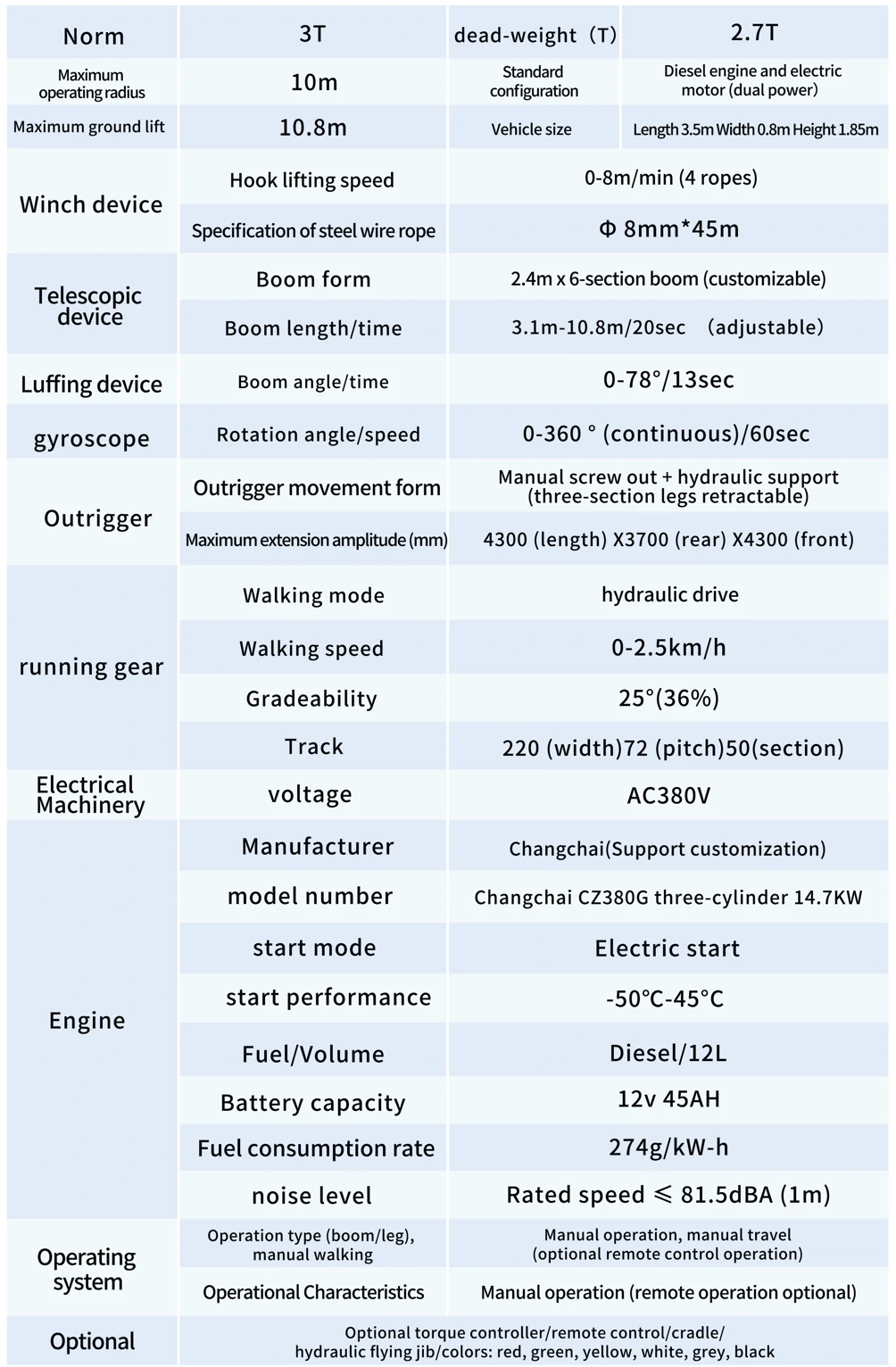
The figures above describe a representative configuration. Final numbers are confirmed against your confirmed drawing and load chart.
FAQ
Q: What is your MOQ?
A: One unit for a trial order. Mixed loading into one container is possible when you buy more than one band.
Q: What is the lead time?
A: Standard builds ship in 20–25 working days after deposit. Non-standard configurations need a short engineering review first.
Q: Do you provide an English operator manual?
A: Yes, together with a parts list and a maintenance schedule. Spare part numbers are listed so your local workshop can order direct.
Q: Can a Small Spider Crane be customized?
A: Yes. Narrower bodies, longer booms, and attachment brackets are built to order. Send the requirement and we confirm feasibility before deposit.