For plant engineers, an Industrial Mini Spider Crane from a China factory is really an uptime decision. Ours is a 1,500 kg unit with proportional control that positions a load inside five millimetres, an electric drive for enclosed workshops, and a maintenance schedule built around production shifts instead of outdoor sites. It fits through a standard shop door and sets up without a foundation.
Industrial lifting is a different discipline from construction lifting. On a site, you can wait half a day for a crane and nobody blinks. In a running factory, a machine that is out of position for four hours stops producing, and the cost is measured in parts per hour, not in schedule slippage.
Ask a maintenance manager what actually hurts and the answers cluster fast.
Machines arrive on a low-bed and have to be walked into position with a forklift that does not fit the aisle.
Changing a pump, gearbox or chiller means hiring a mobile crane that cannot get inside the building, so the job becomes a roof or wall removal exercise.
Overhead cranes are busy, cannot reach the corner, or are simply not fitted in that bay.
Operators improvise with chain blocks and skates, which works until somebody loses a finger or a machine slips off a plinth.
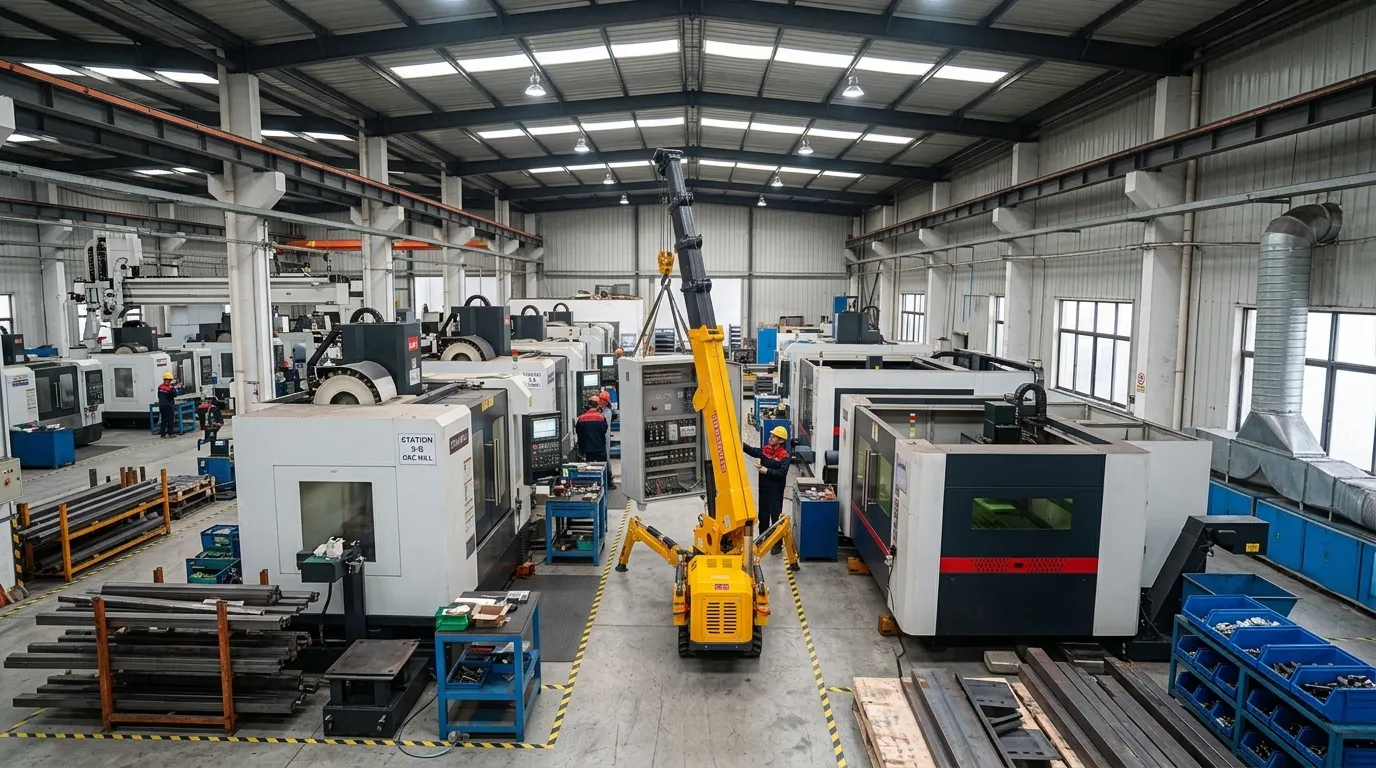
Rather than solve all four, most plants accept them. That is the habit this machine is meant to break. A compact spider crane weighs under 1.5 tonnes, occupies an aisle-width footprint when folded, and lifts half the equipment items in a typical workshop. It goes where the forklift stops and the overhead crane cannot reach.
One distinction worth making early: this is not a rough-terrain workhorse. It is a machine-tool-adjacent lifter. Precision, smoothness and low vibration matter more than outright reach, and the spec sheet is written accordingly.
Precision Placement: Getting a Machine Onto Its Pads
The hardest industrial lift is not the heaviest one. It is the awkward one landing on four anchor bolts with 8 mm of thread showing.
Three things make precise placement possible on this Industrial Mini Spider Crane.
Proportional control. The control valve meters flow continuously rather than switching between fast and stopped. That is why our minimum controlled speed sits near 0.05 m/min at the hook. You can move a load millimetre by millimetre and hold it there.
Hydraulic lock valves on the lift cylinders. Once you release the lever, the load stays exactly where it is, with no drift while you check a shim or reach for a wrench.
Wireless remote as standard. The fitter stands at the anchor bolts, not at the base station, and adjusts the hook height while watching the plinth directly. On a machine-placement job this single feature saves a second person and a lot of shouting.
A work sequence we recommend for any precision set-down:
Skate the machine to within a metre of its pad on rollers, not on the hook. Cranes lift, skates slide. Use both.
Rig from certified lifting points on the machine, with a spreader bar if the manufacturer specifies one. Never sling around a spindle or a guard.
Lift just clear of the floor and pause. Check balance and the sling angles before committing.
Use the fine control mode to bring the machine down onto the shims. Fit shims, not fingers.
Lower to contact, keep the load on the hook until anchor bolts are started by hand, then release.
Confirm level with a precision level or laser, torque the anchors to the machine maker's figure, then remove the rigging.
Operators often ask about repeatability. On our units we quote within five millimetres at the hook under steady conditions, and in practice a skilled operator working with the remote does better than that on a smooth floor. Repeatability comes from valve quality and cylinder stiffness, which is where the money goes in this build.
Compact Footprint, Full-Size Reach
Footprint is where a spider frame beats everything else in a workshop.
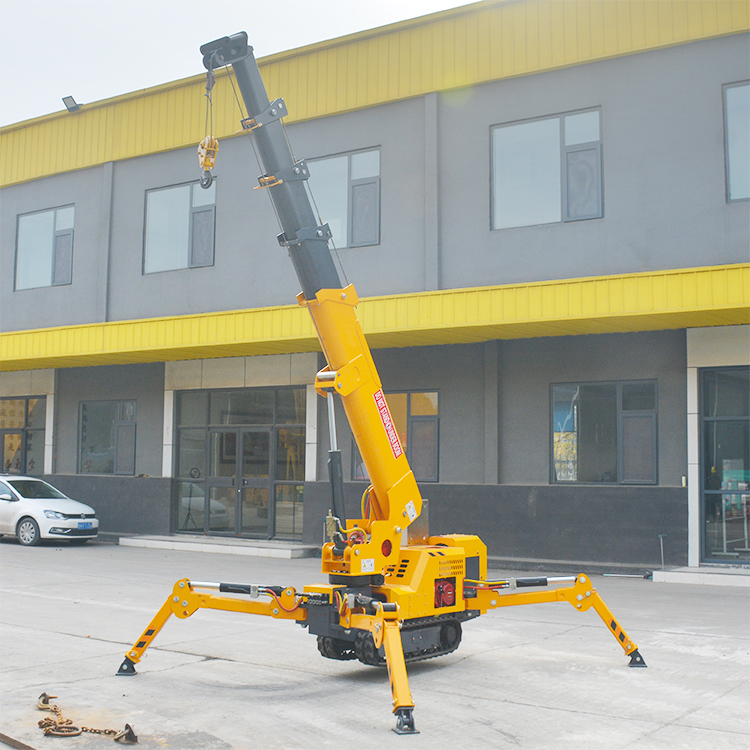
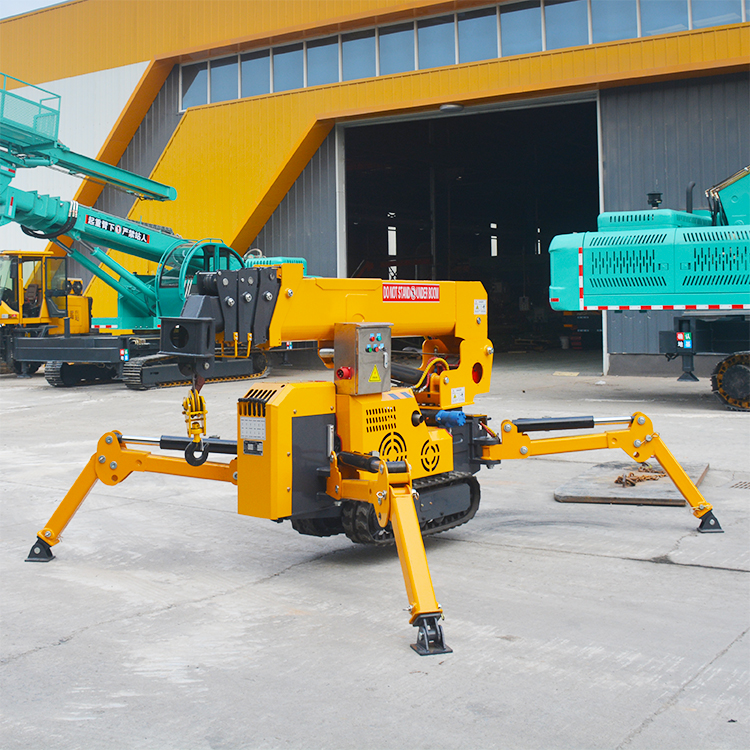
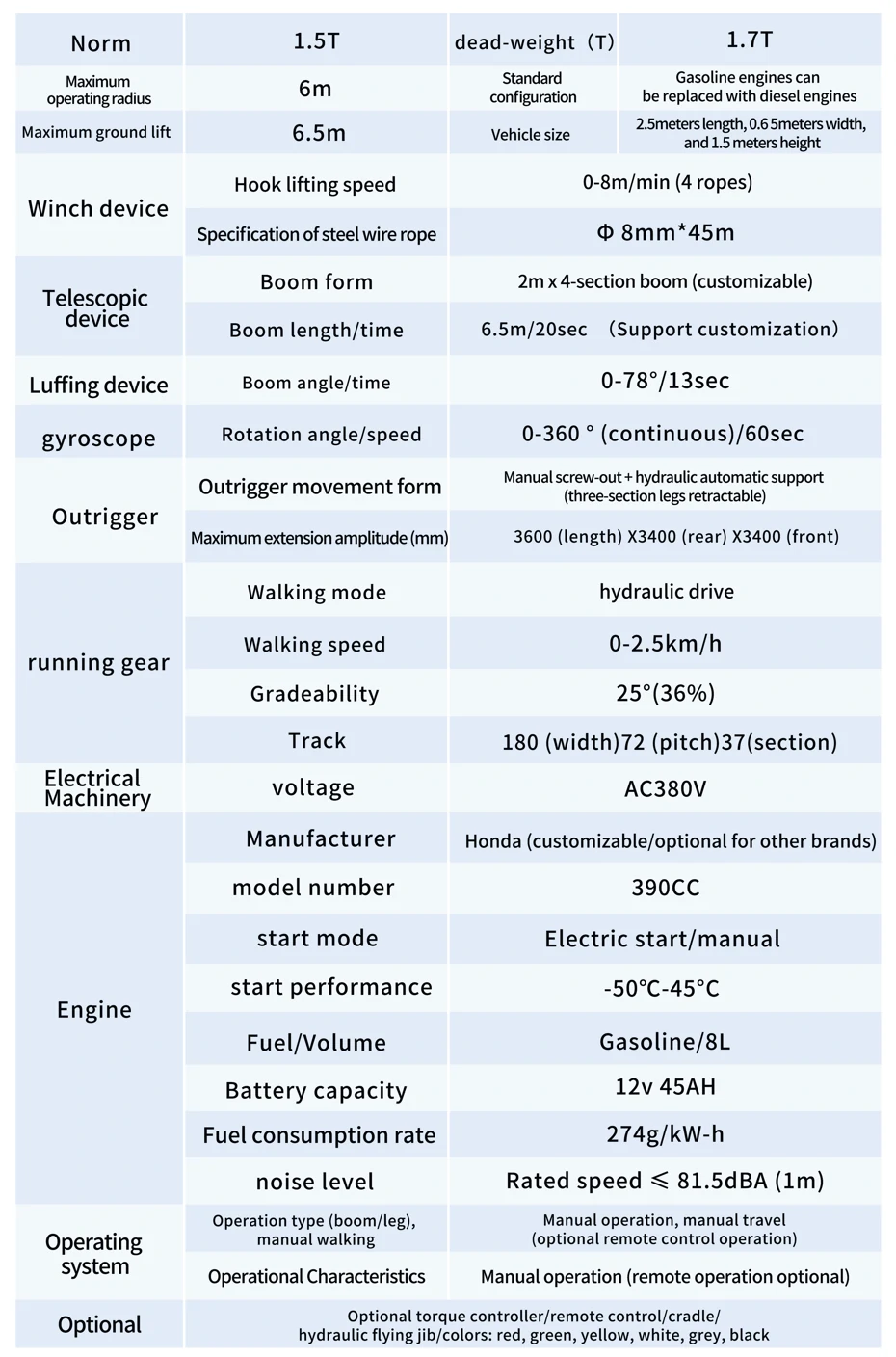
Folded width on our industrial unit is 650 mm and folded length 2,500 mm. That is narrower than a pallet truck with a load on it, and it passes a standard industrial door with room to spare. Height when folded clears typical internal doorways and low mezzanine openings.
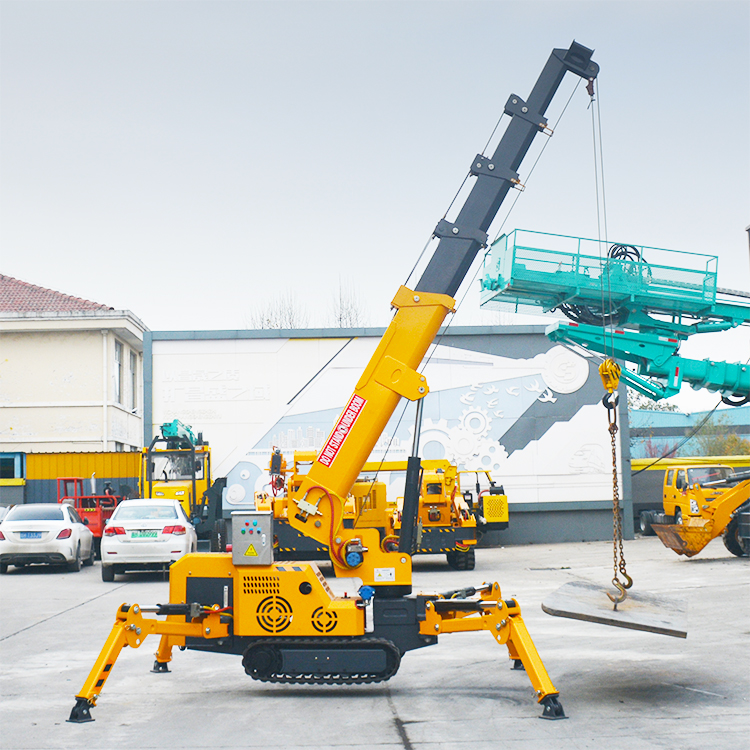
Once on station, the four outriggers open to a roughly 3600 mm by 3400mm support base. Body narrow, stance wide — the same trick the whole spider family uses, and the reason a machine this size can reach past 6000mm.
What that means in practice:
Aisle work without closing the aisle completely. One direction of traffic keeps moving.
Island layouts. Set up in the gap between two machine cells and serve both.
Basements and plant rooms. Electric drive, no exhaust, workable noise level, so you can run it while the building is occupied.
Clean areas. Rubber pads on the outriggers, no hydraulic spill risk if you maintain seals, and no diesel particulate anywhere near food or pharma production zones if you choose the electric build.
Two caveats we will not hide. First, outrigger pad loads on this machine reach around 6.5 kN per pad under full load — most industrial slabs take that easily, but check any suspended mezzanine or raised floor before you set up. Second, if the aisle is genuinely narrow and the machine must travel loaded, fit the optional low-profile frame; the standard unit is not a pick-and-carry crane.
For plants that move equipment regularly, a second use case appears: this machine becomes the permanent asset that means you stop calling in a crane hire for every pump swap. Several of our industrial customers describe it that way — the tool that removed a recurring invoice.
Specifications
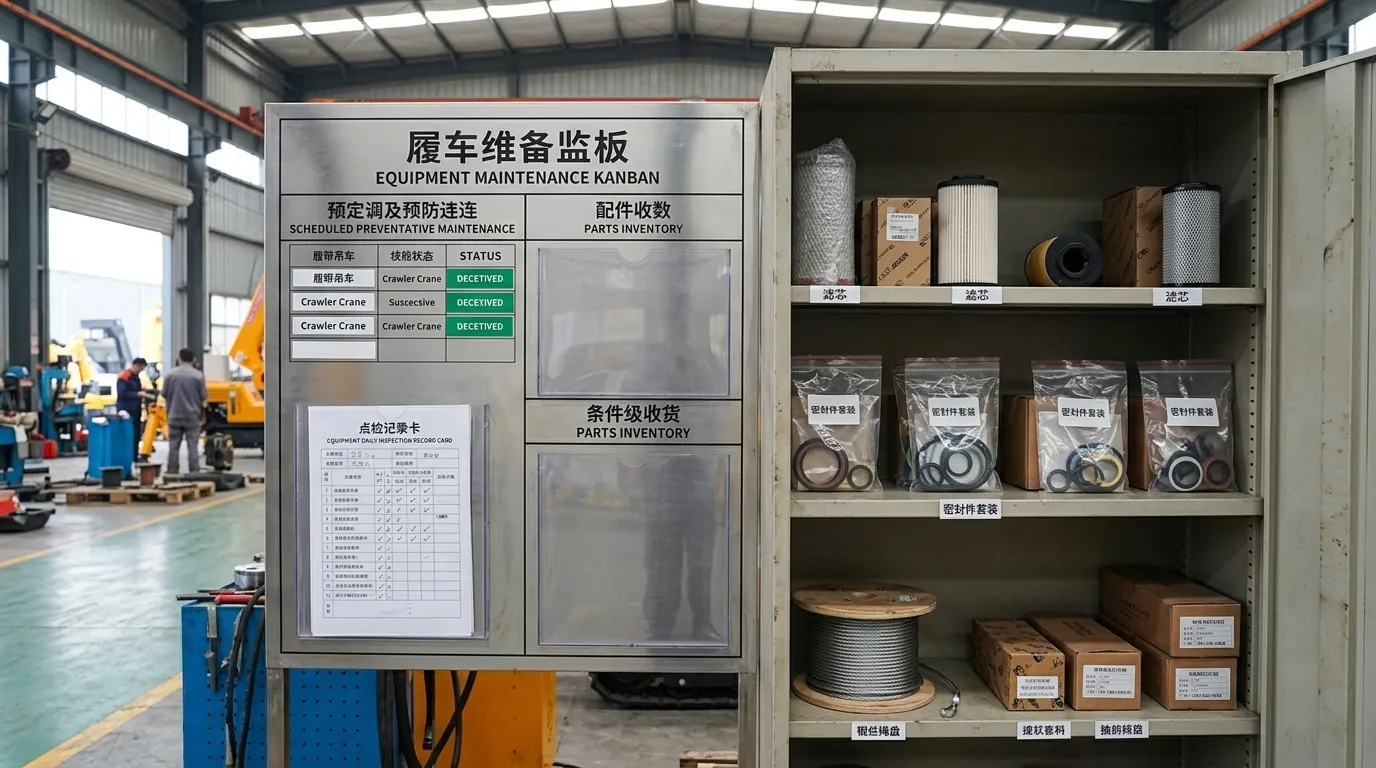
Planned Maintenance for Continuous Duty
Industrial buyers care about the schedule more than the brochure. This is the interval sheet we ship with every unit.
Interval
Task
Every shift
Check oil level at sight glass, look for weeps at fittings, test E-stop, inspect hook latch and rope
50 hours
Grease slew bearing, boom pivot pins and outrigger pivots; note hydraulic oil temperature at end of shift
Oil sample analysis; clean suction strainer; check boom slide pads and adjust if worn
1,000 hours
Replace hydraulic oil; re-calibrate and re-seal the moment limiter; replace rope if wear limits reached
2,000 hours
Inspect slew gearbox and winch brake assembly; replace all cylinder seals as a set
Three rules that matter more than the table itself.
Oil temperature is the health signal. If the reservoir runs hot on a normal duty cycle, something is failing. Trend it, do not ignore it.
Seals are consumable, not permanent. Replacing them as a set at 2,000 hours costs far less than a mid-shift failure during a critical installation.
Keep the remote charged and paired. It is a control device, so treat a flat battery as a machine-down event and keep a spare on the charger.
JOJOmechanical keeps filter elements, seal kits, wire rope and remote handsets in stock for the industrial range and can ship small parts by air when a line is stopped. Our export team will also build a tailored spare-parts package around your actual operating hours if you tell us the duty cycle.
FAQ
Q: Will an Industrial Mini Spider Crane fit through my workshop door?
A: Folded width is 650 mm and folded length 2,500 mm, so it passes standard industrial and warehouse doors comfortably. Measure your tightest doorway and any ramp or step on the route, and we will confirm clearance against the exact frame you are ordering.
Q: Can it run continuously, or does it need cooldown breaks?
A: It is built for shift work, not for one lift a day. Continuous duty is fine on the electric build provided the hydraulic oil temperature stays inside range, which our spec achieves in normal shop ambient conditions. In hot environments, tell us the ambient temperature and we will adjust the oil grade and cooling to suit.
Q: What is the maintenance cycle and what does it cost to keep running?
A: Plan on filter elements at 250 hours, oil at 1,000 hours and a seal set at 2,000 hours, with daily visual checks and 50-hour greasing in between. Consumable cost per year is modest for a machine of this class; we provide a priced spare-parts list with the quotation so there is no surprise later.