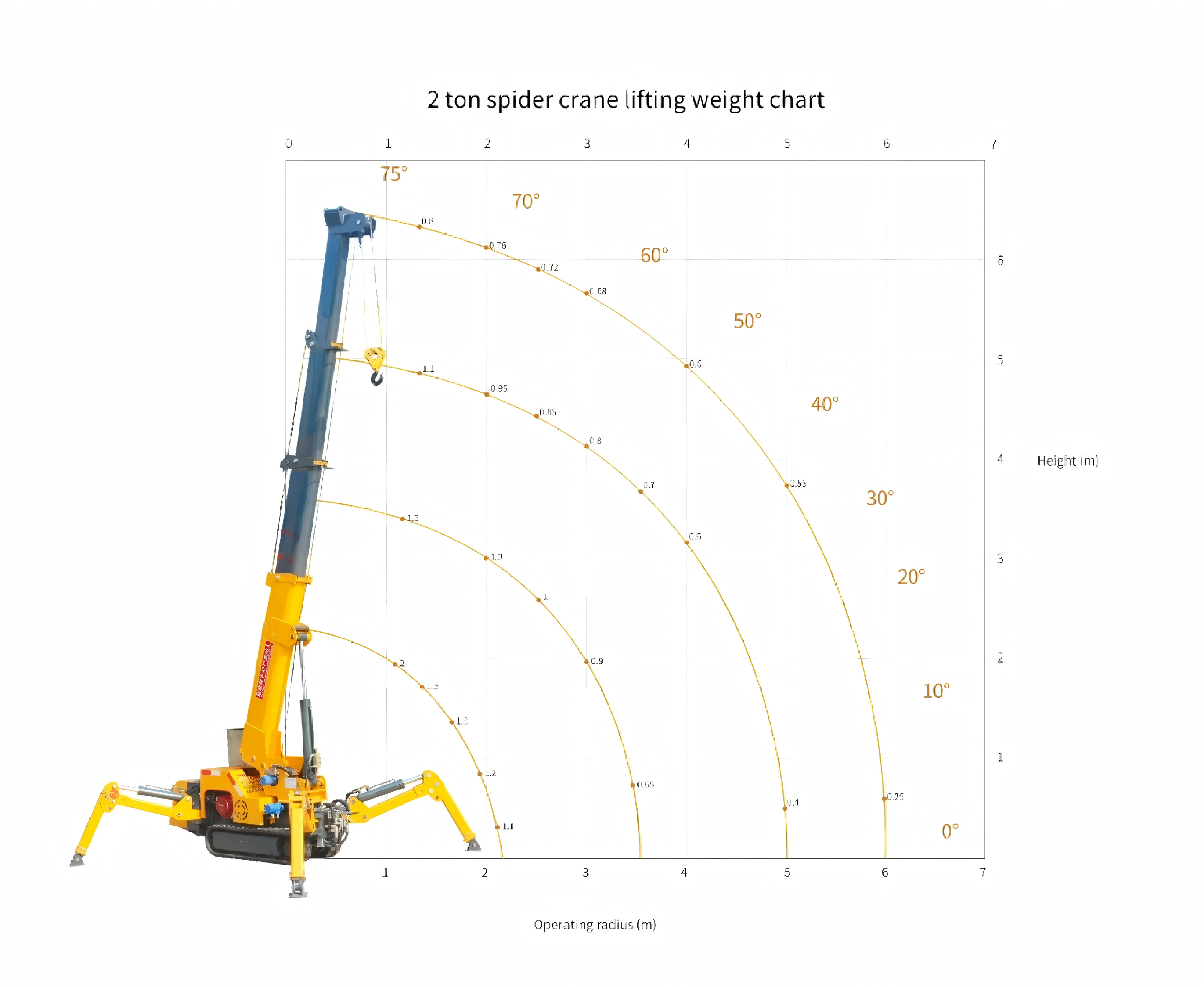
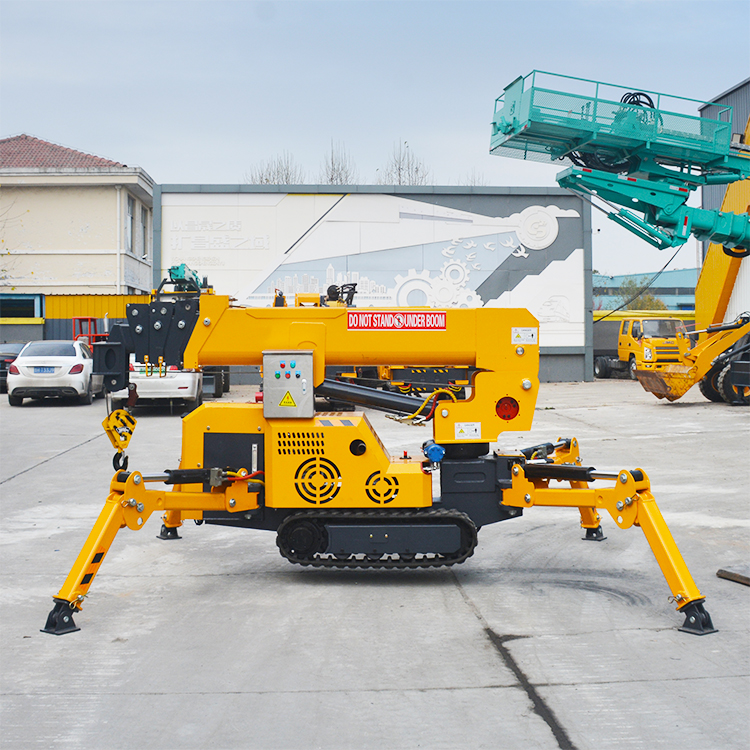
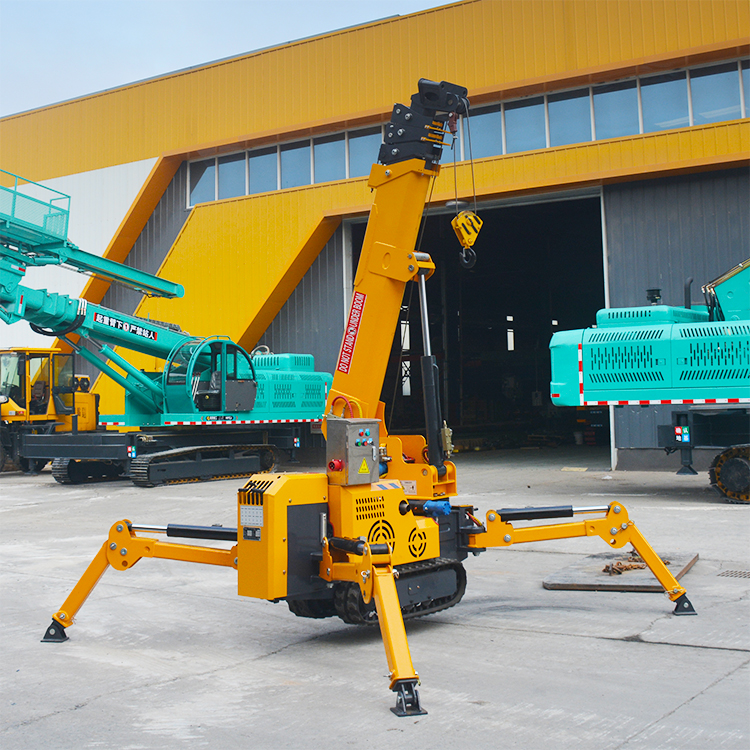
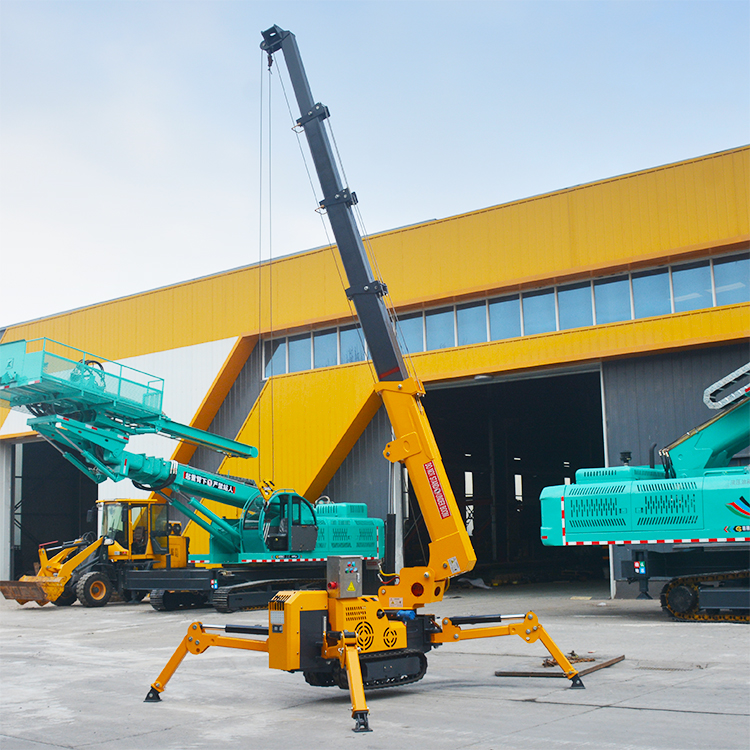
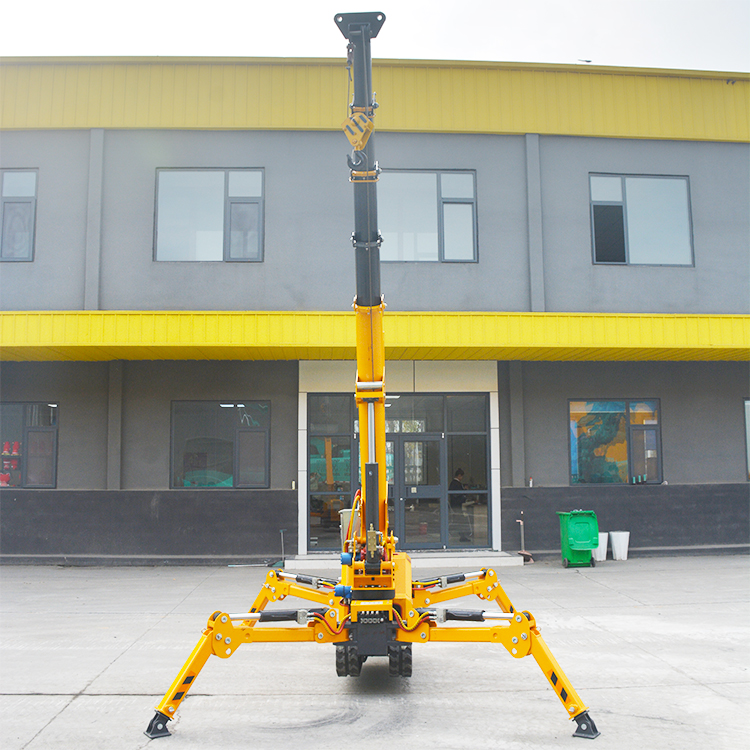
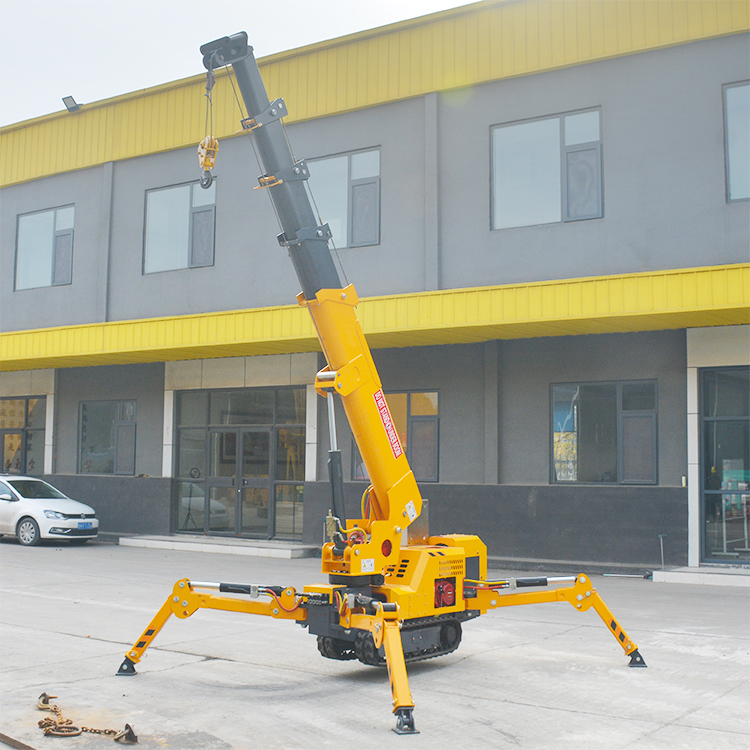
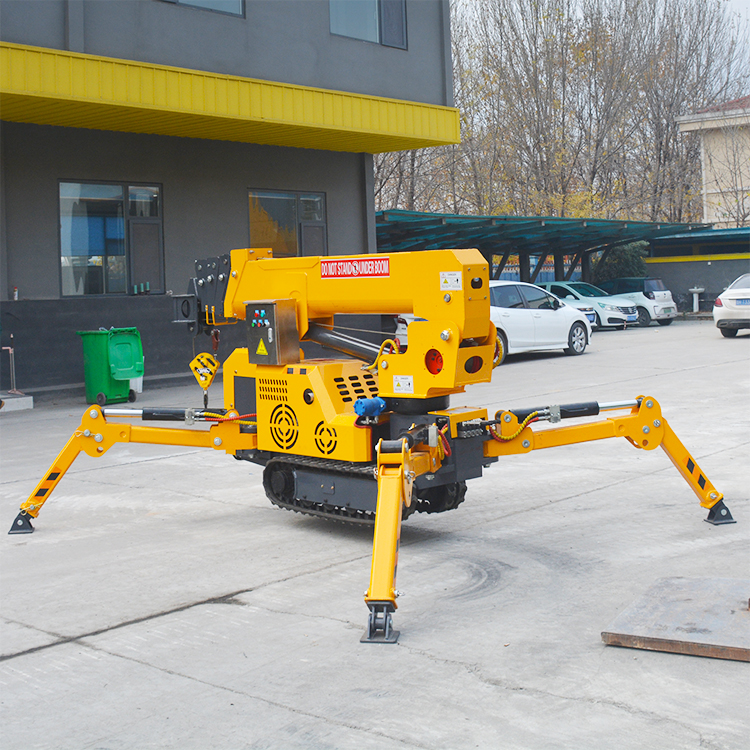
As a China spider crane manufacturer, JOJOmechanical builds the 2 ton spider crane on the same compact chassis as our 1.5 t unit, rated one step higher for crews that keep running out of margin. Six metres of working radius, 6.5 m of lift height, 1.8 t dead weight and a four-section boom. Send the lift list and the access width, and the price list follows.
JOJO Machinery is a China-based manufacturer specializing in spider cranes. Our 2-ton spider crane adopts the compact chassis design of our 1.5-ton model, offering an increased load rating to resolve insufficient lifting capacity issues encountered on-site. Fitted with a four-segment boom, it reaches a 6m working radius and 6.5m maximum lifting height, with an overall machine weight of 1.8 tons. Kindly request the lifting capacity table and access clearance width, and we will attach the quotation list for your reference promptly.
Where The Extra Half Tonne Goes
Nobody buys a 2 ton machine for the tonnage. They buy it because a 1.5 t unit was close but not quite, and the difference showed up on the third lift of the day.
The rating rises from 1.5 to 2 t, and the carrier weight rises with it to 1.8 t. In practice the machine keeps the frame, the four-section boom and the 6 m radius that made the smaller unit easy to live with, and gains headroom in the hydraulic system rather than in its footprint. That is the point of this size: the same site access, more margin on the same lift.
We see three jobs where the extra margin pays. Glass panels that come in slightly heavier than the drawing says. Steel profiles lifted wet. And anything lifted at an angle where the chart figure is close to the limit and nobody wants to argue about slings and hook block weight. A rated 2 t with a 1.8 t carrier gives that argument room to breathe.
Boom And Outriggers On A Small Chassis
The boom is two metres folded and four sections extended, reaching 6.5 m in about twenty seconds. Four sections rather than six keeps the nose light, which matters on a machine this size: a heavy nose steals capacity exactly where the chart is thin.
Luffing runs 0 to 78 degrees in roughly thirteen seconds and the turret turns continuously through 360 degrees in a minute. For work along one face of a building, that combination means the machine is set once and picked from all day.
Outriggers are three-section legs, manual screw-out with hydraulic automatic support, spreading to 3,620 mm along the machine, 3,440 mm at the rear and 3,470 mm at the front. That spread is deliberately generous for the class. On a suspended slab, spread is what keeps a 1.8 t machine from becoming a structural question, and the pads are steel rather than rubber for the same reason.
Walking, Tracks And Site Access
Hydraulic drive, 0 to 2.5 km/h, gradeability of 25 degrees or 36 percent, on rubber tracks 180 mm wide with a 72 mm pitch. The machine is 1.62 m tall folded, so it goes under most interior door heads, and the track width is narrow enough for garden gates and service corridors.
Owners use the walking function far more than they expect. Lifting is a small part of the day; positioning the machine between picks is the rest, and a tracked carrier that walks itself under load saves the crew from dragging it.
Petrol Or Diesel: The Engine Choice
Standard power is a Honda 390CC gasoline engine with electric start, rated from -50 C to +45 C, on an 8 L tank with a 12 V 45 Ah battery and consumption around 274 g/kW-h. Measured noise is under 81.5 dBA at one metre. A diesel engine can be fitted on the same mount for markets that prefer it, and the electrical machinery runs at AC380V for indoor sites where engines are not welcome.
Fuel cost is not the deciding factor at this size. Ventilation is. If the machine works inside finished buildings, plan for the electric option from the start rather than discovering it after the first complaint.
Specifications
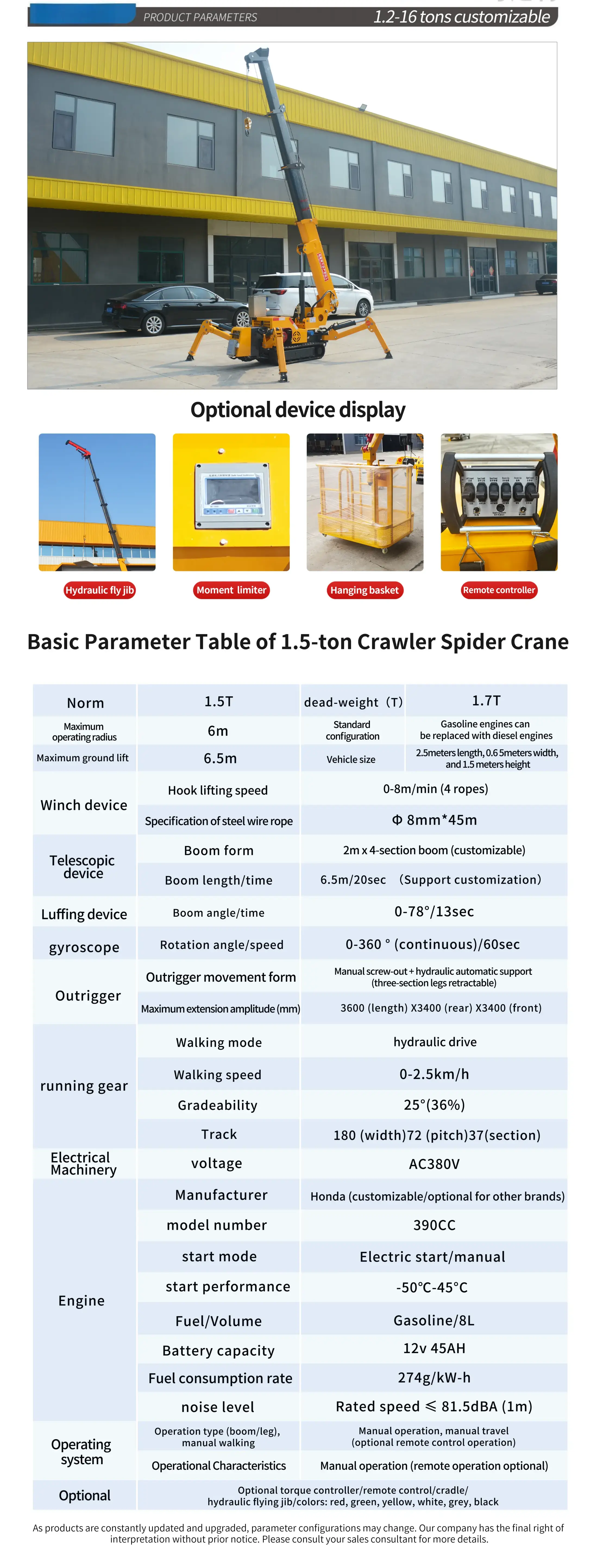
Figures are for the standard 2-ton crawler spider crane. Configurations are customisable and optional devices are quoted as separate lines.
Item
2 Ton Spider Crane
Note
Rated capacity
2 t
Customisable range 1.2 t to 16 t
Dead weight
1.8 t
Transport and floor loading
Maximum operating radius
6 m
Capacity falls with radius
Maximum lifting height
6.5 m
From ground level
Hook lifting speed
0-8 m/min
Four ropes
Wire rope
8 mm x 45 m
Winch device
Boom form
2 m x 4 sections
Customisable
Boom length and time
6.5 m in 20 sec
Support customisation
Luffing
0-78 degrees in 13 sec
Boom angle and time
Slewing
0-360 degrees continuous, 60 sec
Full rotation
Outriggers
Three-section legs retractable, manual screw-out with hydraulic automatic support
Steel pads
Outrigger extension
3,620 mm length, 3,440 mm rear, 3,470 mm front
Maximum
Travel
Hydraulic drive, 0-2.5 km/h
Walking mode
Gradeability
25 degrees (36 percent)
Per chart
Tracks
180 mm width, 72 mm pitch, 37 sections
Rubber
Machinery voltage
AC380V
Indoor or engine-free sites
Engine
390CC gasoline, diesel available
Other brands optional
Fuel and tank
Gasoline, 8 L
274 g/kW-h
Battery
12 V 45 Ah
Standard
Noise
Below 81.5 dBA at 1 m
Rated speed
Operating
Manual boom and legs, manual travel
Remote control optional
Height folded
1.62 m
Interior door clearance
Parameters are updated as the product develops, so confirm the final configuration with your sales consultant before ordering.
Options And Fleet Colours
Torque controller, remote control, cradle and hydraulic flying jib are all built to order. The torque controller is the option we recommend without hesitation, because it stops the lift before the machine tips and costs a fraction of the repair. Colours run to red, green, yellow, white, grey and black, applied before assembly.
Typical Work For A 2 Ton Spider Crane
Glass and facade panels on low and mid-rise buildings, where the panel is heavier than the drawing and access is through a doorway rather than a gate. Steel frames and profiles on renovation projects. Rooftop plant such as condensers and small air handling units. Machinery moving inside factories and shops. Garden and landscape work that has to cross finished paving.
FAQ
1.Q: How much can the 2 ton spider crane lift at full radius?
A: The load chart governs, not the sticker. At 6 m the capacity is lower than at close radius, and we confirm your heaviest pick against the chart before the order is placed.
2.Q: Does it fit through a standard internal door?
A: Folded, the machine is 1.62 m high with tracks 180 mm wide, and the folded layout is built for narrow access. Send the narrowest opening and we check it against the drawing.
3.Q: Petrol or diesel?
A: Gasoline 390CC is standard and diesel fits the same mount. Indoor work is usually specified with the AC380V electrical machinery instead of either.
4.Q: What is the lead time and the terms?
A: Standard build ships 30 to 35 days after order confirmation, with 10 to 15 days added for customisation. Terms are 30 percent deposit and 70 percent against shipping documents, by bank transfer or letter of credit.
5.Q: Which options are worth ordering at the factory?
A: The torque controller and, if the crew works alone, the remote control. Both are cheaper and quicker fitted at build than added later on site.
6.: What spare parts come with the machine?
A: Exploded-view catalogues with item numbers, plus a consumables set covering filters, seals and rope. Quote the serial number to our export team for anything unit-specific.
Ordering
To quote this machine we need the lift list with weights and radii, the maximum height, the narrowest opening on site, the ground under the outriggers and whether an engine may run there. Add the destination port and quantity, and the quotation comes back with options listed separately. Minimum order is one unit, machines ship in sea-freight crates with the boom secured, and a 12-month warranty covers the machine.