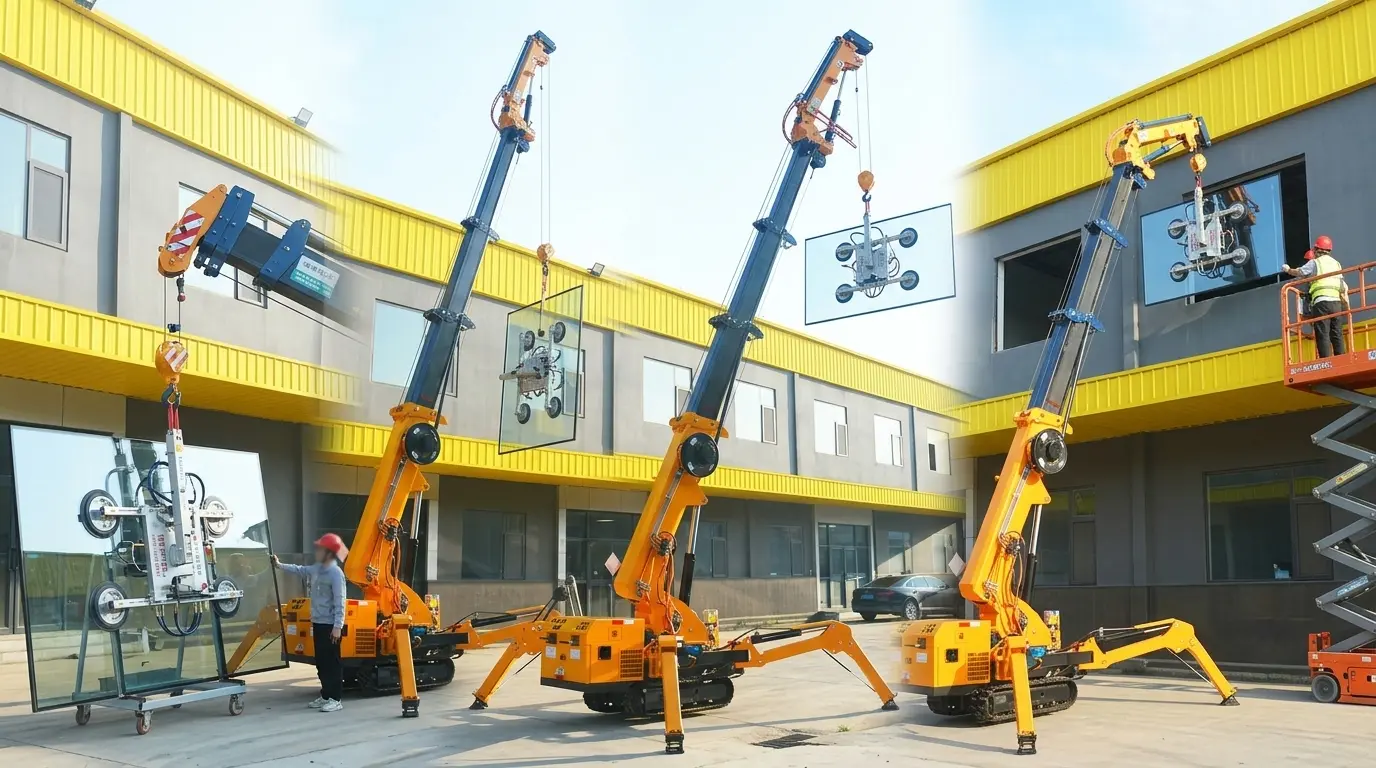
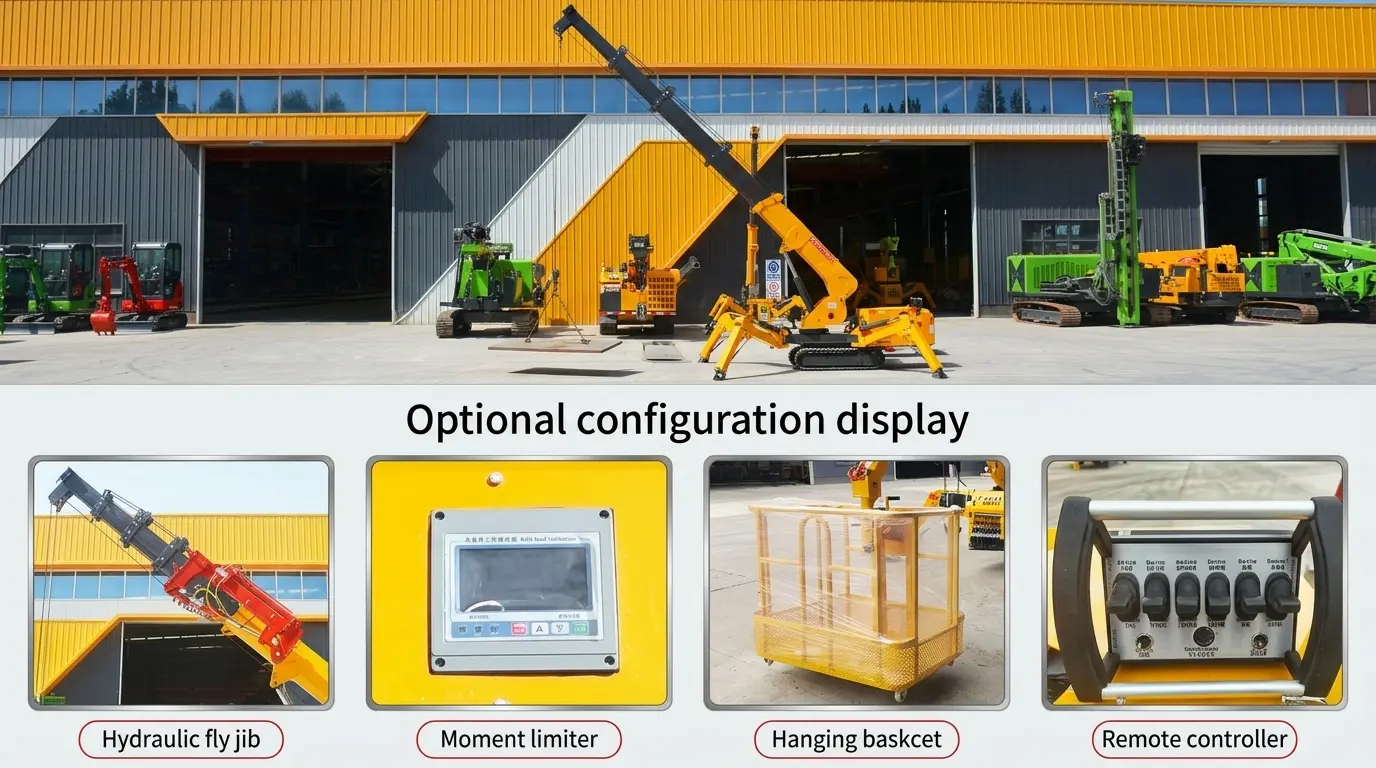
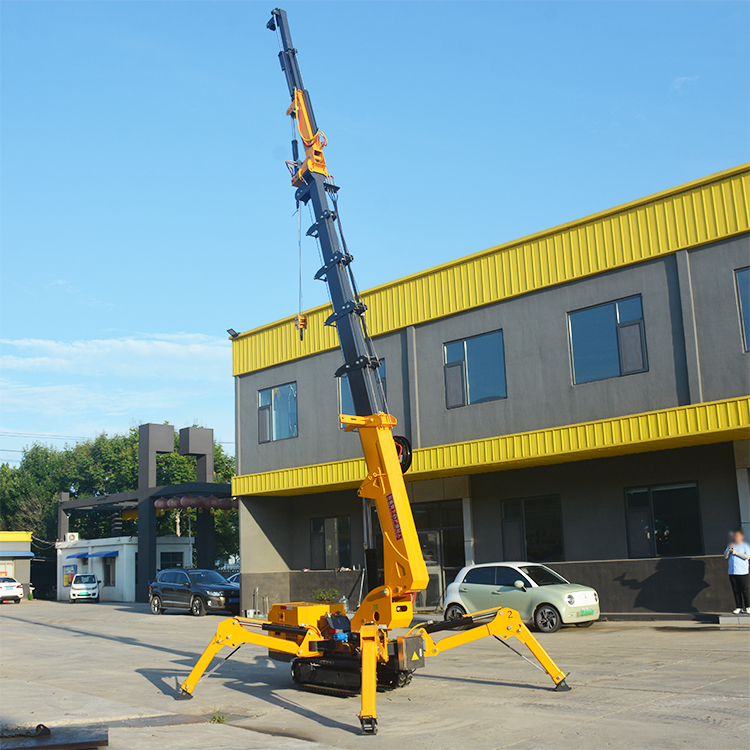
Glass Lifting Small Spider Crane: a China manufacturer's view. One number decides the specification — the largest pane on your drawings — and we build the boom and vacuum head to match it. This page covers vacuum head selection, positioning tolerance, wind limits, the lifting sequence and the safety chain. Send the pane schedule and JOJO Machinery quotes a configured unit, not a generic one.
A curtain wall panel is heavy but not enormous. The hard part is never weight. It is the last 200 mm.
You have to place a 1.2 t insulated glass unit into a frame opening to within a few millimetres, at height, without touching the mullion, in a breeze, with installers waiting on the scaffold. That is the work this machine exists for.
Glass has no tolerance for shock loading. A sling with a small lift and a sudden take-up will crack a panel at the corner, and the crack shows up three hours later in the sun. Hydraulic micro-control matters here more than maximum tonnage, and it is why we tune the proportional valve on glazing units differently from general-purpose machines.
What Glazing Work Really Demands
A curtain wall panel is heavy but not enormous. The hard part is never weight. It is the last 200 mm.
You have to place a 1.2 t insulated glass unit into a frame opening to within a few millimetres, at height, without touching the mullion, in a breeze, with installers waiting on the scaffold. That is the work this machine exists for.
Glass has no tolerance for shock loading. A sling with a small lift and a sudden take-up will crack a panel at the corner, and the crack shows up three hours later in the sun. Hydraulic micro-control matters here more than maximum tonnage, and it is why we tune the proportional valve on glazing units differently from general-purpose machines.
Positioning Accuracy
On a Glass Lifting Small Spider Crane, micro-control is the difference between a one-hour panel and a three-hour panel. Our glazing configuration runs a slow-speed mode that keeps boom and slewing movement deliberately gentle under load, so an operator can nudge a panel sideways without overshooting. The load chart for glazing work is published at the working radius you will use, not at minimum radius.
On-Site Lifting Sequence
A repeatable pattern beats improvisation on a glazing job. Ours runs like this: survey the landing point and confirm the frame is clear; set the machine on level ground with all four outriggers fully deployed and pads under them; test vacuum on a spare panel and hold for the specified time; attach, lift to just above the frame, rotate, then lower slowly in slow-speed mode; hold, let the installers fix the panel, and only then release vacuum. Confirm the hook is clear before slewing away.
Specifications
Parameter
Value
Max lifting capacity
2,000 kg
Max radius with vacuum head
9.5 m
Max lifting height
12 m
Vacuum head options
1 / 4 / 6–8 pads
Vacuum reservoir
Fitted, with non-return valve
Max glass weight (typical)
1,600 kg
Positioning tolerance (practical)
5–10 mm
Slow-speed mode
Yes, reduced boom and slew speed
Max operating wind speed
10 m/s (glazing), lower for jumbo units
Outrigger footprint
3.4 x 3.4 m
Certification
CE, ISO 9001
Warranty
12 months
Safety Around Glass
Wind is the number one hazard. A large panel is a sail, and gusts above the working limit will move a load faster than any operator can react. Stop work, lower the panel, wait. That instruction belongs in your method statement.
Ground pressure under the outriggers comes next. On a finished plaza or a landscaping strip, use load-spreading pads and check the surface on the day, because a soaked sub-base behaves differently from a dry one.
Keep everyone out from under the load path. Nobody needs to be beneath a 400 kg panel to guide it, and a tag line does the job from a safe distance. Every JOJOmechanical glazing package leaves the factory with a lifting method sheet written in plain English — pad test pressure, hold time, wind limit and release order — so the crew on site is working to a written procedure rather than to memory.
FAQ
Q: What is the largest glass size the crane can handle?
A: On our standard glazing configuration, up to roughly 1,600 kg with a six- or eight-pad head at a working radius of 8 m. Send the panel dimensions with the weight and we confirm against the load chart rather than a brochure figure.
Q: Is the vacuum head included?
A: A Glass Lifting Small Spider Crane is supplied as a matched package with the vacuum head, so the pump, reservoir and pad capacity are sized together. Heads can also be ordered separately if you already own a compatible unit.
Q: What wind speed is safe for glazing?
A: On the Glass Lifting Small Spider Crane we recommend stopping at 10 m/s for standard panels and applying a stricter limit for jumbo units. Local site rules and the glass supplier's guidance always override our general figure.
Q: Can you match our existing pad frame?
A: Usually yes. Send the frame drawing and the pad spacing, and our engineers confirm the adaptor plate design before production.
Q: How is the machine delivered?
A: Shipped as a folded package with the vacuum head crated separately. Installation and first-lift guidance can be supplied by video call at handover.