What Four Tonnes And Fifteen Metres Changes
A four-tonne rating with fifteen metres of height moves a machine out of the fit-out category and into structural work. It will place a glass unit on the fourth floor of a building with no crane access, lift a precast element over a finished wall, or set a steel section on a frame above a live ground floor.
It does that from a carrier weighing 3 t, which is the number that matters when the machine has to cross a pavement, a garden or a suspended slab to get to the lift. Four tonnes of capacity on three tonnes of machine is a ratio we set deliberately: the chassis stays light enough to move with a small trailer and the rating stays honest on the chart.
Most orders for this size come from crews who have outgrown a three-tonne machine on height rather than on weight. If your lift is 12 m up and 200 kg, the tonnage was never the problem. The reach was.
Six Sections, 3.1 To 15 Metres
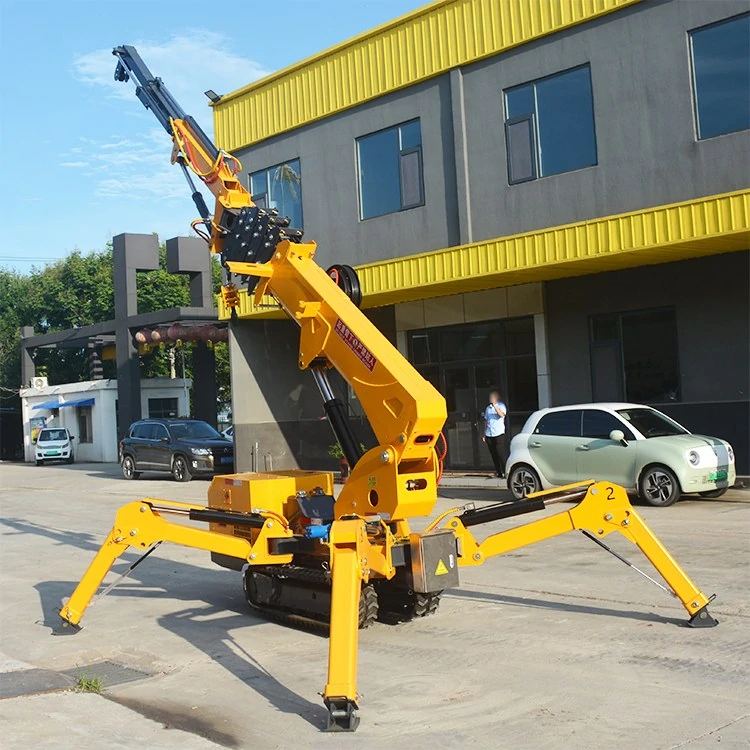
Folded length is 3 m. Extended, the boom passes through six sections to reach 15 m, taking around twenty seconds end to end. Luffing covers the full 0 to 78 degree arc in thirteen, and slew is continuous through 360 degrees in a minute. Six sections are what make 15 m possible without a folded package that cannot pass through a doorway.
Hook speed is 0 to 8 m/min on four ropes with an 8 mm rope of 45 m, matched to the boom rather than pushed beyond it. Placing a panel at 15 m is a slow, controlled operation by design; speed at the hook buys nothing if the load swings.
Dual Power And Where It Matters
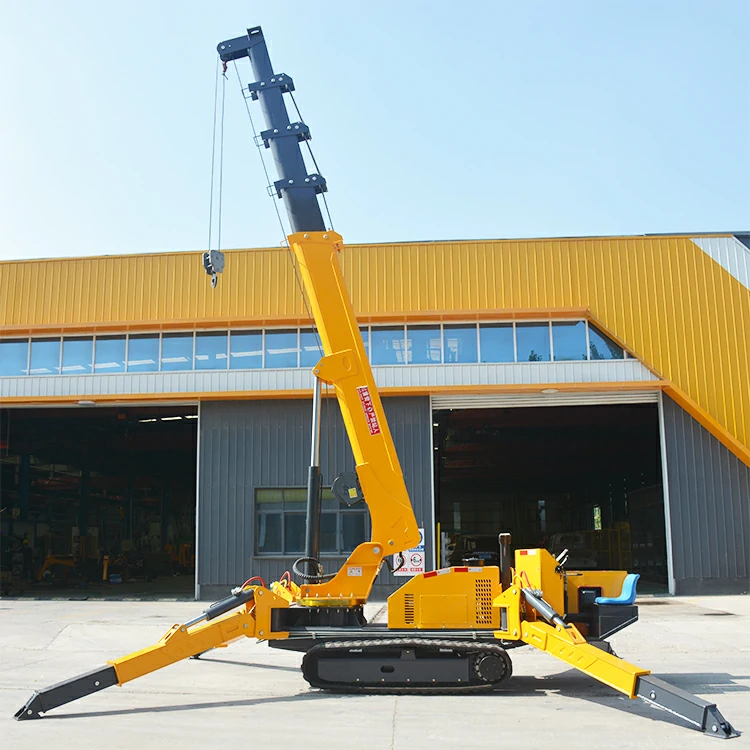
Power is a Changchai CZ380G three-cylinder diesel at 14.7 kW, working alongside an AC380V electric motor. A 12 L diesel tank, 12 V 45 Ah battery, electric start rated from -50 C to +45 C, consumption around 274 g/kW-h and noise under 81.5 dBA at a metre.
The dual arrangement exists for one reason: this class of machine is often needed inside a building and outside it on the same job. Facade panels come off a lorry in the yard on diesel; the same machine then goes inside to install them on mains power. Choosing only one power source means renting or converting later.
Outriggers, Tracks And Access
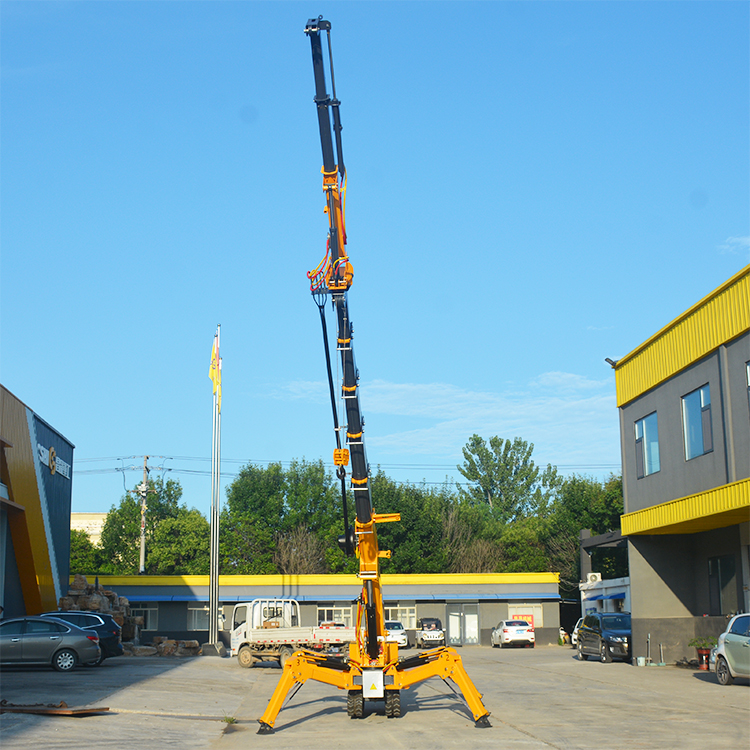
Outrigger legs are three-section units, screwed out by hand and locked by hydraulics. Maximum spread reaches 4,230 mm at the front and along the machine, 3,830 mm at the rear. Steel tracks 230 mm wide on a 72 mm pitch and 53 sections, hydraulically driven at 0 to 2.5 km/h with 25 degrees or 36 percent of gradeability. Folded, the machine measures 4.25 m long, 1 m wide and 1.83 m high.
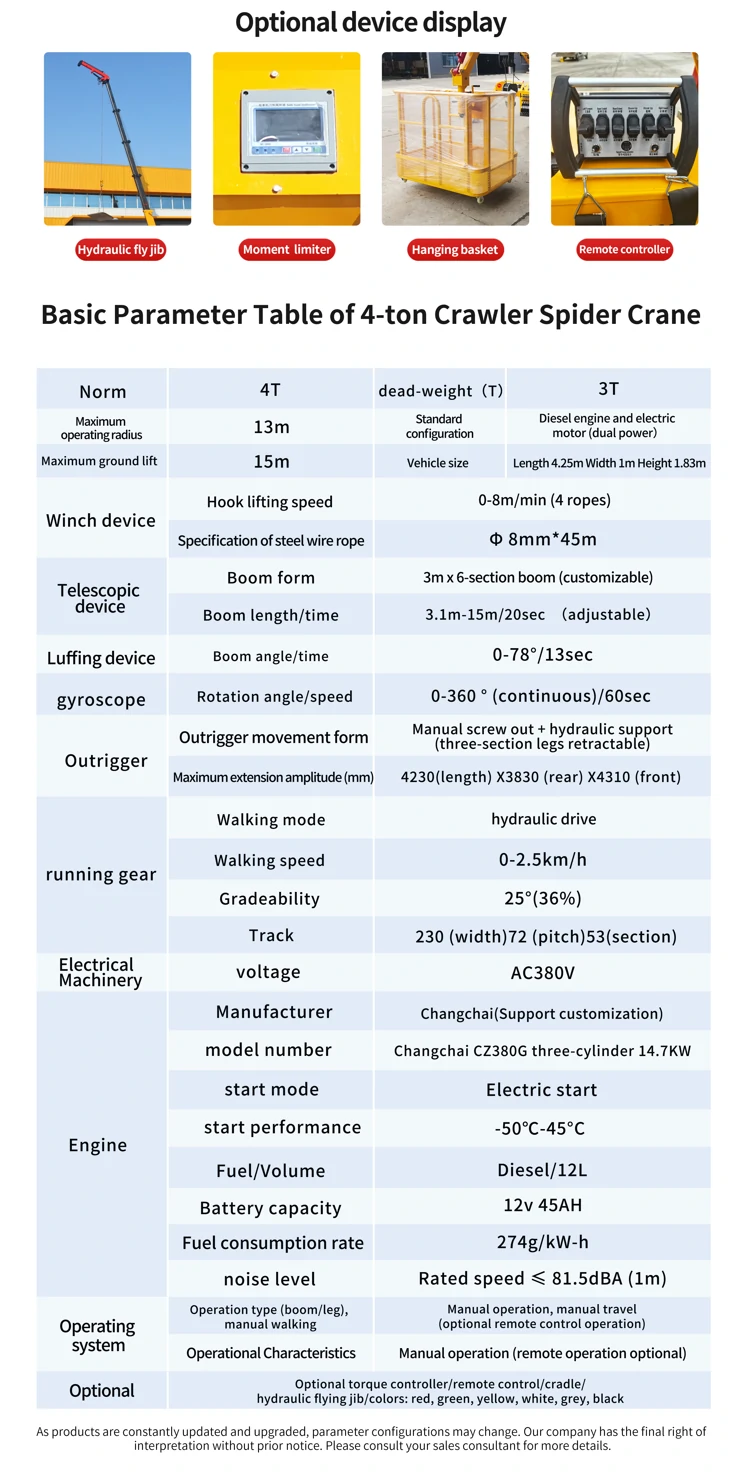
Specifications
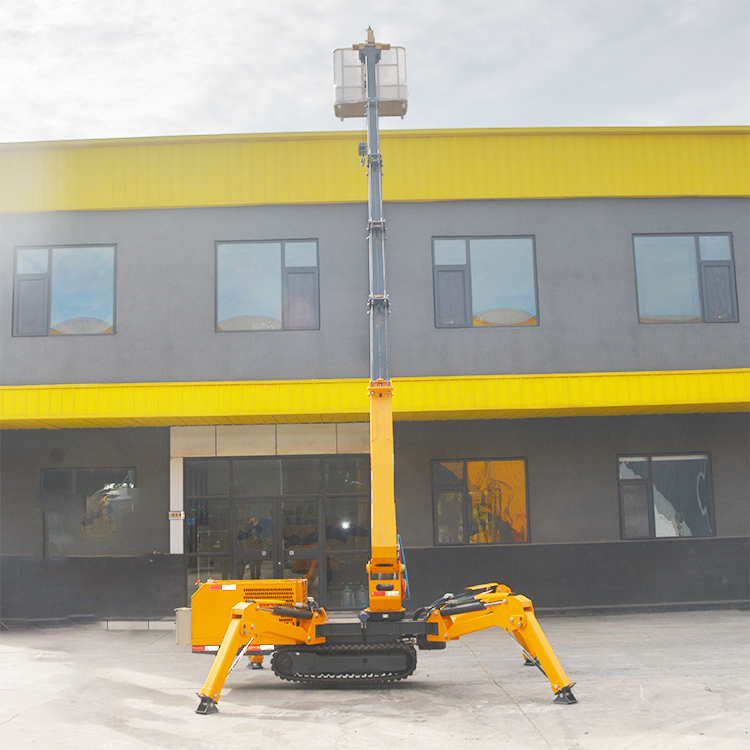
The table covers the standard 4-ton crawler spider crane. The range is customisable between 1.2 t and 16 t, and optional devices are quoted as separate lines.
|
Item
|
4 Ton Spider Crane
|
Note
|
|
Rated capacity
|
4 t
|
Dead weight 3 t
|
|
Maximum operating radius
|
13 m
|
Capacity falls with radius
|
|
Maximum lifting height
|
15 m
|
From ground level
|
|
Hook lifting speed
|
0-8 m/min
|
Reeved four-part
|
|
Wire rope
|
8 mm x 45 m
|
Winch and rope
|
|
Boom form
|
3 m x 6 sections
|
Built to order
|
|
Boom length and time
|
3.1 m to 15 m in 20 sec
|
Cycle time
|
|
Luffing
|
0-78 degrees in 13 sec
|
Arc and timing
|
|
Slewing
|
0-360 degrees continuous, 60 sec
|
Continuous
|
|
Outriggers
|
Three-section legs retractable, manual screw-out with hydraulic support
|
Hydraulic lock
|
|
Outrigger extension
|
4,230 mm length, 3,830 mm rear, 4,230 mm front
|
Fully extended
|
|
Travel
|
Hydraulic drive, 0-2.5 km/h
|
25 degrees, 36 percent
|
|
Tracks
|
230 mm width, 72 mm pitch, 53 sections
|
Steel sections
|
|
Machinery voltage
|
AC380V
|
Mains drive
|
|
Engine
|
Changchai CZ380G three-cylinder diesel, 14.7 kW
|
Diesel plus AC380V motor
|
|
Fuel and tank
|
Diesel, 12 L
|
0.27 kg per kWh
|
|
Battery
|
12 V 45 Ah
|
Supplied
|
|
Noise
|
Below 81.5 dBA at 1 m
|
At rated speed
|
|
Vehicle size
|
4.25 m long, 1 m wide, 1.83 m high
|
Transport
|
|
Operating
|
Manual boom and legs, manual travel
|
Radio remote optional
|
Parameters are revised as the product develops. Confirm the final specification with your sales consultant before ordering.
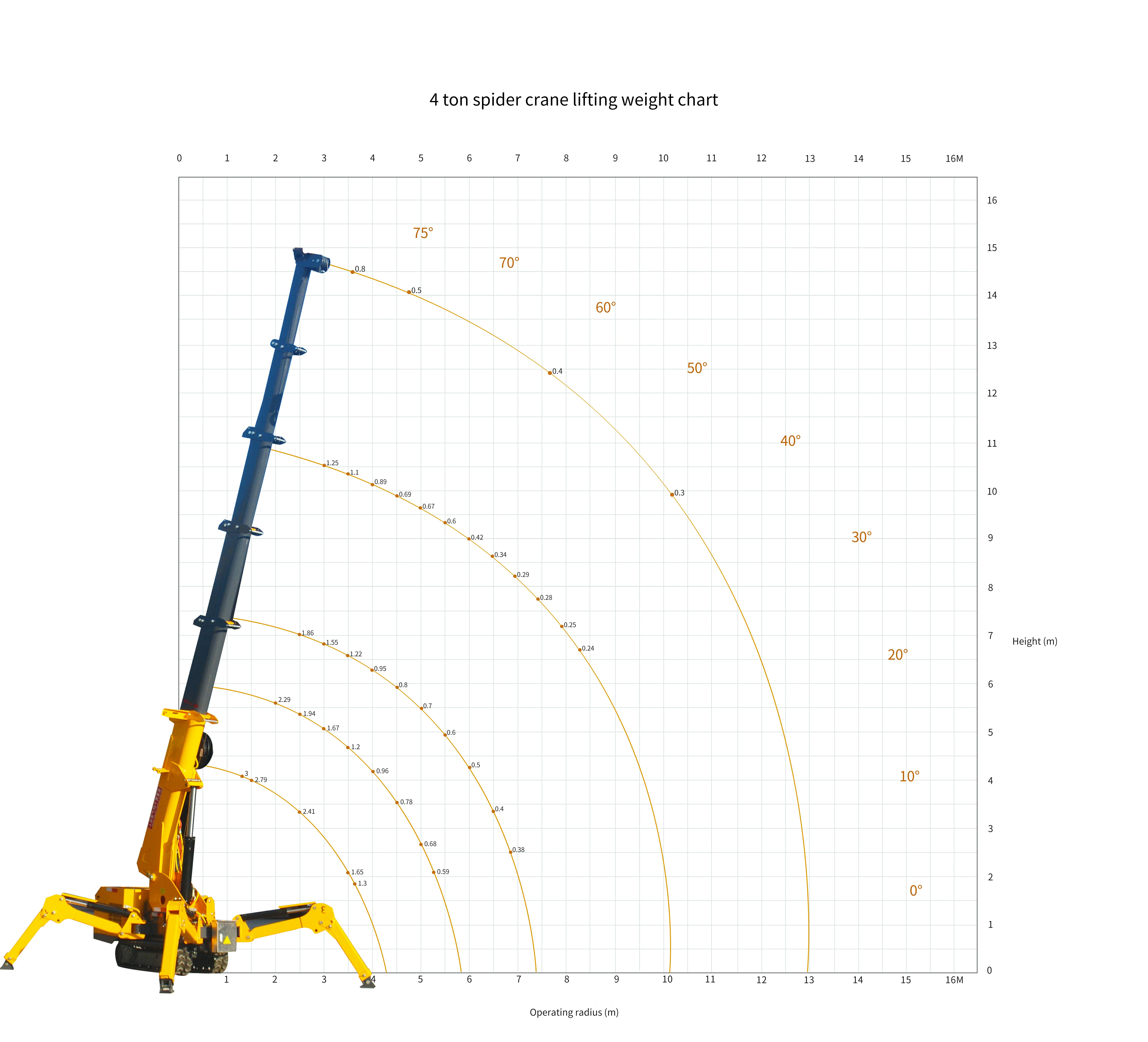
Lifting weight chart
Options And Applications
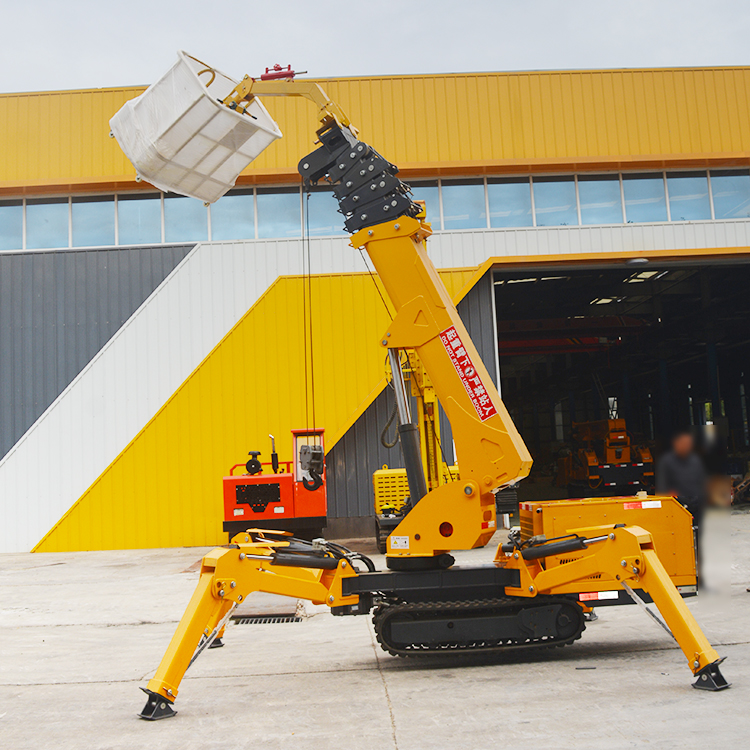
Options are the torque controller, radio remote, cradle and hydraulic fly jib. Fleet colours are red, green, yellow, white, grey or black. Typical work: curtain walling to four storeys, rooftop chillers and air handling units, precast panels on extensions, steel erection over occupied ground floors, and plant installation inside factories.
FAQ
Q: Is 15 m of height usable at full load? A: No, and no crane in this class is. Height and radius reduce capacity, and the load chart states the figure for each combination. We check your heaviest pick against the chart before quoting.
Q: Can it be used on a suspended slab? A: The outrigger spread and steel pads distribute the load, but the slab capacity is a structural question. We supply the outrigger loadings for your engineer to check.
Q: How is it transported? A: Folded at 1 m wide and 1.83 m high, it travels on a small trailer or inside a container, boom retracted and outriggers stowed.
Q: What power source is recommended? A: Dual power where the machine works both outside and inside. Diesel-only where all work is external and ventilation is not an issue.
Q: Lead time and payment terms? A: A standard machine leaves the factory in three to four weeks; allow another fortnight where the build is customised. Payment runs 30 percent on order with the balance against the shipping documents.
Ordering
Five answers produce an accurate price: lift list with weights and radii, height required, narrowest access, ground under the outriggers, and the power supply available. Add the destination port and quantity. Minimum order is one unit, and the machine ships crated with the boom secured, a 12-month warranty and exploded-view parts catalogues.


